Still torn between a buffet or plated dinner wedding? Your catering style affects more than just the menu. It shapes the flow of your reception, the guest experience, your staffing needs, and even your wedding catering budget.
Some couples love the relaxed, social atmosphere of a buffet at a wedding. Others prefer the elegance and structure of plated dinner catering. Long lines, cold food, or guests with nothing they can eat can throw off the whole night — so this decision matters more than most people realize.
In this guide, we break down the real differences between buffet and plated catering styles, compare costs, cover family style as a middle-ground option, and help you choose the setup that actually fits your event.
Key Takeaways
- Buffets and plated dinners create very different wedding experiences — the best choice depends on your venue, guest count, timeline, and atmosphere.
- Buffets aren’t always cheaper, and plated meals aren’t always formal.
- Plated dinner catering offers better portion control and smoother reception timelines.
- A buffet at a wedding works well for large, casual, or outdoor receptions.
- Always ask your caterer for quotes on both styles before making a final decision.
Is Buffet or Plated Dinner Cheaper?
For most mid-to-large weddings, buffet catering tends to cost less per head due to lower staffing needs — but plated dinners often come out cheaper for smaller guest counts because of better portion control and reduced food waste.
The cheaper option depends on several factors:
- Guest count and catering staff-to-guest ratio
- Venue logistics and available space
- Number of food stations and menu complexity
- Rental equipment like chafing dishes and warming trays
- Service timeline and event flow
Buffets often save on labor because they require fewer servers. But caterers typically prep more food than needed to prevent running out, which drives up per-person catering costs and increases food waste.
Plated dinner catering requires more kitchen crew, servers, and runners — but portions are carefully planned in advance, so you’re not overbuying. For a smaller, intimate wedding, that predictability often makes plated service the more budget-friendly choice.
A simple plated dinner for 60 guests may cost less than a large buffet for 150 with multiple serving stations, upgraded menu options, and additional rental equipment.
Bottom line: Always ask your caterer for clear quotes on both styles based on your guest count and venue before making a final decision.
What Is a Plated Dinner?
A plated dinner is a catering style where guests remain seated and servers deliver individually portioned meals directly to each table. Meal selections are typically collected in advance through RSVP meal preselection so the kitchen can prepare accurate portions for every guest.
Plated dinner catering is most commonly chosen for:
- Formal weddings and luxury receptions
- Ballroom venues with structured event timelines
- Smaller, intimate weddings where food presentation matters
- Events where the reception schedule needs to stay on track
Unlike a buffet, plated service keeps the dinner hour organized and allows the reception to flow smoothly into toasts, speeches, and dancing. Servers deliver each course at the same time, which helps maintain pacing and avoids the crowding or long lines that can come with self-serve formats.
Done right, plated dinner catering feels elegant, thoughtful, and effortless for guests.
When a Buffet at a Wedding Makes Sense
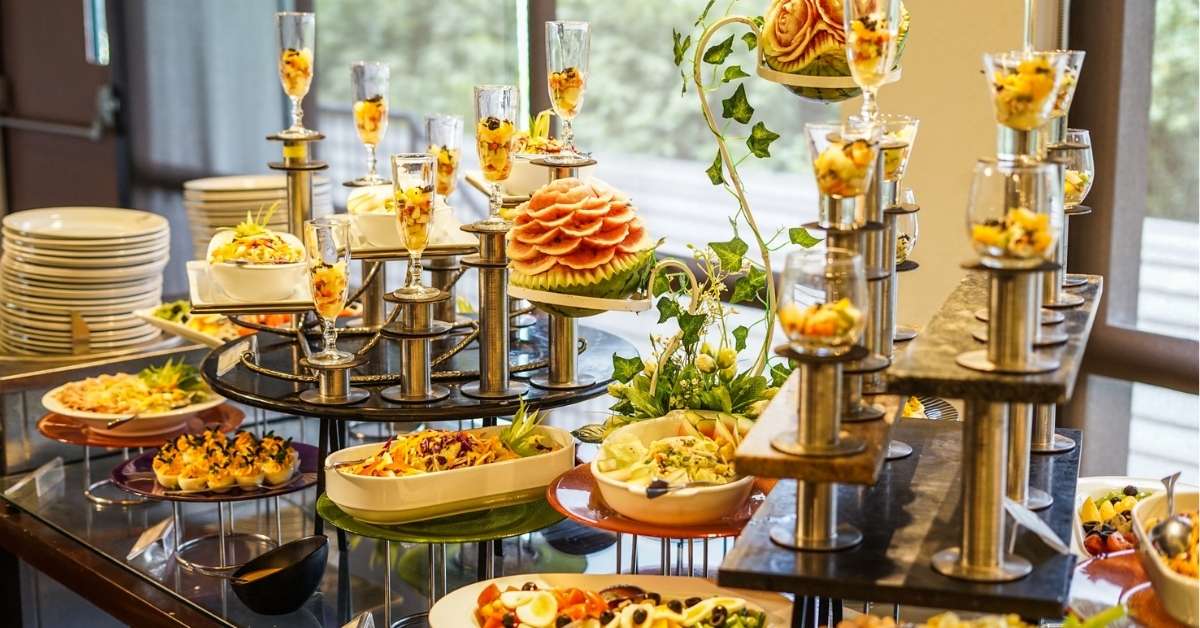
A buffet at a wedding works well when you want a relaxed, social atmosphere where guests can choose their own plates, customize portions, and go back for seconds.
Buffets are especially useful for:
- Large guest lists where plated service would be too slow
- Outdoor weddings and rustic or DIY venues
- Casual receptions with younger or mixed-age guest lists
- Events with diverse dietary restrictions or food allergies
- Couples who want more menu variety without requiring guests to choose meals in advance
The flexible, guest-friendly format encourages movement and interaction, which can make the reception feel more like a gathering than a seated ceremony.
There are tradeoffs, though. Buffets require additional setup space for food stations, warming equipment, and guest movement. Lines can slow down the reception timeline if there aren’t enough serving stations. And portion control becomes unpredictable when guests serve themselves, which is why caterers often prep extra — adding to both cost and food waste.
When Plated Dinner Catering Makes Sense
Plated dinner catering creates a more organized and elevated dining experience. Guests stay seated while servers deliver meals at the same time, helping your reception stay on schedule and keeping the energy focused.
This catering style works best for:
- Formal or traditional weddings
- Luxury receptions where food presentation is a priority
- Smaller guest counts where staffing costs are easier to manage
- Venues with limited space for buffet stations
- Tightly scheduled events with specific timelines for toasts, dances, and other activities
Plated service also reduces food waste because portions are carefully planned per guest based on RSVP meal selections. While it requires more catering staff, most couples find the smoother flow and elegant presentation well worth it.
And no — plated dinners aren’t just for ballrooms or black-tie events. A well-executed plated dinner works beautifully at laid-back weddings too, as long as you’re comfortable collecting meal choices in advance.
Plated Dinner vs. Buffet Wedding: Which Is Better for Guests?
The best catering style depends entirely on the experience you want your guests to have.
A buffet at a wedding may work better if you want:
- More menu variety and dietary flexibility
- A casual, interactive atmosphere
- Guests to move around and socialize during dinner
- A more relaxed reception flow
Plated dinner catering may work better if you want:
- Elegant food presentation and a formal dining experience
- A smoother, more controlled reception timeline
- Less crowding and no waiting in line
- Faster, simultaneous table service
One nuance worth noting: older guests often appreciate plated meals because they don’t have to stand in line, while younger guests may enjoy the flexibility and movement of buffet-style dining. If your guest list skews mixed in age, that’s worth factoring into your decision.
Buffet vs. Plated Catering Styles: Full Comparison for Events
| Aspect | Buffet Dinner | Plated Dinner |
| Guest Experience | Relaxed and social | Formal and organized |
| Dinner Flow | Flexible pacing | Structured timeline |
| Staffing Needs | Fewer servers, more setup support | More servers and kitchen staff |
| Portion Control | Less predictable | Carefully controlled |
| Food Waste | Higher due to extra prep | Lower — quantities planned per plate |
| Dietary Flexibility | Easier to accommodate on the spot | Requires RSVP meal preselection |
| Space Requirements | Needs food stations and room for lines | Requires less guest movement |
| Best for Large Weddings | Yes | Sometimes |
| Best for Formal Weddings | Occasionally | Yes |
| Per-Person Catering Cost | Can vary widely | Easier to predict and budget |
| Guest Wait Times | Sometimes longer | Usually shorter |
| Atmosphere | Casual and interactive | Elegant and polished |
| Food Presentation | Varies | Consistent and intentional |
Wedding Buffet vs. Plated: Which Fits Your Wedding Style?
| Wedding Type | Best Catering Style |
| Formal ballroom wedding | Plated dinner |
| Outdoor or garden wedding | Buffet |
| Luxury reception | Plated dinner |
| Casual or rustic wedding | Buffet |
| Large guest count (100+) | Buffet |
| Smaller intimate wedding | Plated dinner |
| Interactive social atmosphere | Buffet or family style |
| Tight reception timeline | Plated dinner |
| Diverse dietary restrictions | Buffet |
| Budget-conscious wedding | Depends on guest count — ask your caterer |
Final Thoughts on Buffet vs. Plated Dinner Weddings
There’s no one-size-fits-all answer when comparing a wedding buffet vs. plated dinner. Both options offer real advantages — and real tradeoffs — depending on your venue, guest count, catering budget, and the kind of evening you want to create.
If you want a relaxed, interactive reception with more menu variety and flexibility for dietary restrictions, a buffet at a wedding may be the better fit. If you prefer an elegant, structured dining experience with smoother timelines and consistent food presentation, plated dinner catering is likely the right call.
The best decision comes down to:
- Your wedding style and venue
- Reception flow and event timeline
- Per-person catering budget
- Guest comfort and accessibility
- Staffing and logistical needs
At Davoli’s Catering Jacksonville, we’ve executed both styles thousands of times — from relaxed outdoor buffets to formal plated dinners with military precision. We can help you find the catering setup that fits your vision, your venue, and your guests.
You can also explore our buffet catering options in Jacksonville, FL if you’re looking for a flexible, large-event setup.
Let’s Plan Your Wedding Menu Today
Frequently Asked About Buffet Vs Plated Dinner
Is buffet or plated dinner cheaper for weddings?
For most mid-to-large weddings, buffet catering tends to cost less per head because it requires fewer servers. However, plated dinner catering can be cheaper for smaller guest counts because portions are controlled in advance, reducing food waste and over-preparation. Pricing depends on guest count, staffing, rental equipment, and menu complexity — so always ask your caterer for quotes on both before deciding.
What is the difference between buffet and plated dinner service?
A buffet lets guests serve themselves from food stations, while plated dinner service means catering staff bring individually portioned meals to each guest at the table. Buffets offer more menu flexibility and work well for larger, casual events. Plated dinners provide a more structured, elegant dining experience with better portion control and smoother reception timelines.
Is buffet catering good for large weddings?
Yes. A buffet at a wedding works well for large guest counts because it offers menu variety, flexibility for dietary restrictions, and doesn’t require guests to make meal selections in advance. Just make sure your venue has enough space for food stations and that your caterer sets up enough serving lines to keep wait times short.
Can I mix buffet and plated styles?
Yes. Some couples serve a plated main course with a buffet-style dessert station or late-night snack setup. Family style catering is another hybrid option. Ask your caterer what combinations work best for your venue and guest count.
Does one catering style work better for outdoor weddings?
Buffets tend to suit outdoor and rustic venues well because they’re more flexible with space and easier to adapt to informal settings. Plated dinner catering can also work outdoors if your venue has the infrastructure to support proper table service and your event timeline allows for it.