
Buffet vs. boxed lunch for meetings is a question every office planner runs into sooner or later.
You’re trying to keep people fed, on time, and at least somewhat happy, all while staring at a room that may or may not have space for a food line.
A buffet feels more like an event and keeps choices open. A stack of labeled boxes makes life easier when the schedule is tight and laptops never close.
The smart move is to match the food style to the meeting. It depends on the length, the headcount, and how much you want people to move, talk, and mingle.
Here’s a simple breakdown of both so you can match the food to the meeting instead of guessing.
KEY POINTS
- Pick the style based on the meeting, not personal food preferences. Short, tight meetings and small rooms usually suit boxed lunches, while longer or larger gatherings with more room and looser agendas work better with a buffet.
- Buffets give more choice and a livelier, social feel, but need space, time, and extra food. Boxed lunches keep things fast, predictable, and easier for dietary needs, but you lose the shared buffet moment and have to plan for packaging and trash.
Start With the Meeting, Not the Menu
A Cornell University study found that teams that regularly share meals tend to work together more effectively, which lines up with how many companies now use meeting lunches to strengthen their groups.
Food decisions feel easier when you start with the actual meeting in front of you.
- A one-hour client pitch has zero room for chaos around the buffet table.
- A lunch-and-learn can handle more movement.
- A half-day or all-day planning session usually needs people to stretch their legs.
- A town hall or all-hands leans more toward “event” than “working lunch.”
Agenda, room, and headcount matter more than personal food preferences. Is it a meeting like a tight 60-minute client review? Then, people need food in front of them fast so that they can get to the point.
Is it like a three-hour team workshop? Then, you can build in a more extended break where folks line up, chat, and come back refreshed.
Once you know what the day looks like on the calendar and in the room, the buffet vs. boxed question gets a lot easier, especially with the help of a Jacksonville, FL catering company.
When to Go for Buffet Lunch for Meetings?
Buffets give people a choice. Someone wants a light plate, someone else wants seconds, and someone is hunting for the veggie options.
All of that lives in one line instead of a long email thread about “who eats what.”
Buffets also make a regular meeting feel bigger. For a quarterly update, town hall, or client presentation, a full spread sends a quiet signal that the gathering matters.
People get up, move around, and talk to coworkers they don’t sit next to. That short walk to the buffet can do more for team energy than another slide.
Where Buffets Can Slow You Down
Lines show up fast if the room is tight or the layout isn’t planned. One door, one table, and 50 hungry people turn into a traffic problem.
You also need space for tables, chafers, and a path that doesn’t block the screen or the door.
Portions are harder to predict. Some people eat small portions; some pile on. To avoid running out, you usually order extra food and may need more staff time to manage the line and keep everything topped up and safe.
It’s great for the experience, but not always the cheapest or quickest route.
Best Meeting Types For Buffets
Buffets shine for bigger, less rigid gatherings. Think quarterly or annual meetings, town halls, kickoffs, and significant client events where you want a reception feel.
People have time to move, talk, and refill plates, and no one panics if lunch runs a few minutes over.
When Does a Boxed Lunch for Meetings Just Make Sense?
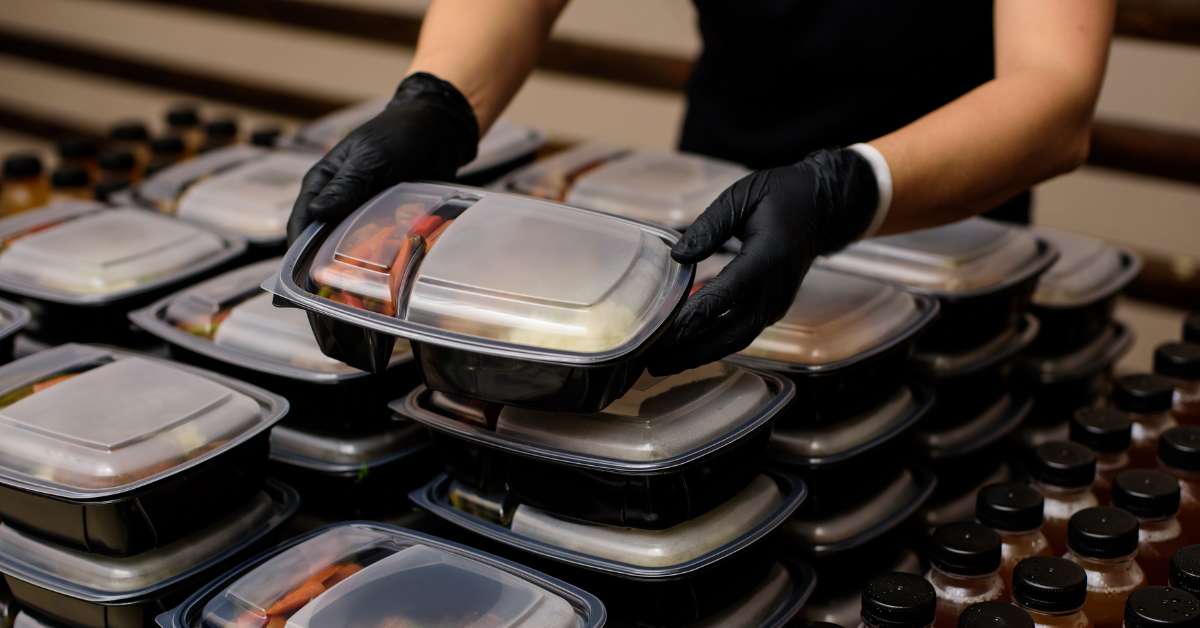
Boxed lunches are built for calendars full of meetings. Food shows up, boxes go straight on the table or on chairs, and people can start eating in minutes.
Headcount is easier to do. You can just plan with one box per person, plus a small buffer.
Then, dietary needs are easier to manage, too, as long as you collect choices early and label everything clearly. It can be gluten-free, vegetarian, or may have no nuts.
That way, each person grabs the box with their name or sticker and sits down. Small rooms love this format, because you don’t need a separate space for a complete buffet layout.
The Trade-offs with Boxed Lunches
You lose that shared buffet moment. People still talk, but they’re not gathering around the same table, comparing what they picked.
Menu choices lock in early, so you need a clean list from the team and a firm deadline for changes.
Packaging and trash need a plan as well. The bags, boxes, cans, bottles… someone has to move it all out of the room so you’re not running strategy next to a pile of containers.
None of this is hard, but it does need five minutes of thought before the day.
Best Meeting Types For Boxed Lunches
Boxed lunches fit board meetings, leadership sessions, training days, workshops, and any run of back-to-back meetings where people eat right at the table.
They also work well when you’re feeding several small groups in different rooms at the same time.
Plan Your Next Meeting Lunch With Confidence
You’ve got the basics of buffet vs. boxed lunch sorted; the next step is putting it to work for a real meeting.
At Davoli’s Catering, we talk through your agenda, headcount, room setup, and timing, then match it with the format that makes the most sense.
Send us the date, time, and guest list, and let us handle the menu, delivery, setup, and cleanup so you can stay focused on the work in the room instead of the food on the table.
FAQs
1. What’s the better choice for a long agenda or an all-day session?
Longer meetings with a clear break in the middle can handle a buffet. People get a chance to stand up, move around, and talk a bit before heading back into the room.
2. Is a buffet always more expensive than boxed lunches?
Not always, but buffets often require extra food and more staff time, which can push the cost up. Boxed lunches make it easier to stick to a set price per person, since you know exactly how many meals you’re ordering.
3. Can I mix buffet and boxed lunches in the same event?
Yes. Many offices run a buffet for most guests and use boxed meals for AV teams, speakers, or people with strict dietary needs. Another standard setup is a boxed breakfast at seats, then a buffet lunch during a more extended break.